
How to Write a Book Blurb That Sells (2026)
Master the art of the book blurb. Genre-specific formulas, real examples, and common mistakes that kill sales on Amazon.
What Is a Book Blurb (And Why It's Your #1 Sales Tool)
A book blurb is the 150-250 word description that appears on the back cover of your paperback and on your Amazon product page. It's the single most important piece of marketing copy you'll ever write for your book — more important than your social media posts, your newsletter, even your cover design in some cases.
Here's why: your cover gets the click. A striking thumbnail in Amazon search results makes a reader curious enough to open your product page. But the blurb closes the sale. It's the moment a browser becomes a buyer — or bounces to the next book.
Studies of reader behavior on Amazon show that shoppers spend 3 to 8 seconds scanning a blurb before making a purchase decision. That's not enough time to read every word. Readers skim for hooks — a character they relate to, a conflict that intrigues them, a question they need answered. If they don't find one in those first few seconds, they're gone.
The most common mistake new authors make is treating the blurb like a summary. They try to explain the plot — who goes where, what happens next, how it all connects. This is backwards. A blurb is not a summary. It's a sales pitch. Its job is to create desire, not deliver information. You're selling an emotional experience, not a sequence of events.
Think of movie trailers. A good trailer doesn't walk you through the plot — it gives you just enough to feel something. Curiosity. Dread. Excitement. Hope. Your blurb needs to do the same thing in 150-250 words.
The good news is that blurb writing is a learnable skill with clear formulas. The best blurbs across every genre follow predictable patterns — patterns you can study, practice, and master. Let's break them down.
These covers got the click — the blurb closed the sale

Bad Bishop: A Dark Mafia Romance (Society of Villains Book 1)

Till Summer Do Us Part

Rewind It Back (Windy City Series Book 5)

Say You'll Remember Me

The Wild Card: a single dad hockey romance

Picking Daisies on Sundays

The Fall Risk: A Short Story

King of Depravity: Dark Steamy Mafia/Billionaire Romance (Kings of Las Vegas Book 1)

The Mysterious Bakery on Rue de Paris: An Enchanting and Escapist Novel from the Internationally Bestselling author of The Lost Bookshop for 2025

The Butcher (Fifth Republic Series Book 1)
The 3-Act Blurb Formula
Every effective blurb follows a three-act structure. This isn't a creative suggestion — it's a pattern that appears in the back cover copy of virtually every bestselling novel. Once you see it, you can't unsee it.
Act 1: The Hook (1-2 sentences). Introduce your protagonist and establish what's at stake. The reader needs to know who this story is about and why they should care — in the first sentence. Lead with character, not world-building. Lead with emotion, not exposition.
Act 2: The Conflict (2-3 sentences). What stands in your protagonist's way? This is the engine of your blurb. The conflict should feel personal, urgent, and — ideally — impossible. The reader should think, "How are they going to get out of this?" That question is what drives them to click Buy.
Act 3: The Stakes (1-2 sentences). What happens if the protagonist fails? Raise the stakes to their highest point — then stop. Do not reveal the ending. The blurb's job is to open a loop in the reader's mind, not close it. End with a question, a cliffhanger, or an impossible choice.
Here's the formula in action:
Detective Mara Chen hasn't slept in four days. The body found in her sister's apartment matches three cold cases she buried years ago — and the killer is using Mara's old case notes as a playbook.
Now someone inside the department is feeding the killer information, and Mara's superiors want her off the case. Every lead pulls her deeper into a conspiracy that reaches the highest levels of the city — and closer to a truth about her sister she never wanted to face.
With a fourth victim already chosen and the clock running out, Mara must decide: protect the sister she loves, or stop the killer who's wearing her own past like a mask?
Notice the structure: Act 1 hooks with character and an immediate problem. Act 2 escalates with obstacles and a conspiracy. Act 3 ends with an impossible choice — and a question the reader can only answer by buying the book.
Blurb Formulas by Genre
The 3-act formula is the foundation, but every genre has its own twist. Readers in different genres scan for different signals — and your blurb needs to deliver those signals within the first two sentences. Here's how to adapt the formula for the six most popular fiction genres.
Romance Blurbs
Romance readers are buying an emotional journey, not a plot. Your blurb must establish the chemistry between the two leads and the emotional barrier that keeps them apart. The stakes are always internal — fear of vulnerability, past trauma, conflicting loyalties — not external.
The formula: Introduce Lead A (with a flaw or wound). Introduce Lead B (who challenges that wound). Show the chemistry — then show why it can't work. End with the question: will they choose love or self-protection?
Key signals romance readers scan for: tropes (enemies-to-lovers, fake dating, second chance), heat level hints, and emotional tone (funny, angsty, sweet).
Example: Noa Friedman swore off dating after her last relationship made tabloid headlines. Now she's a ghostwriter who crafts love stories for other people — and she's fine with that. Really.
Then her publisher pairs her with Caleb Park, a bestselling memoirist who doesn't believe in romance and has no problem saying so. On camera. During their joint book tour.
Twelve cities. Twenty-four days. One tour bus. And an inconvenient truth: the man who thinks love is a narrative device is the first person in years who makes Noa want to write her own story.
Notice: the plot is minimal. The blurb is almost entirely about the dynamic between the two characters. That's by design.
Fantasy Blurbs
Fantasy readers want to feel the weight of the world you've built — but they don't want a geography lesson. Your blurb should hint at the magic system, the scope of the quest, and the cost of failure. The protagonist should feel chosen (or cursed) by forces larger than themselves.
The formula: Establish the world in one vivid detail (not three paragraphs). Introduce the protagonist with their role or burden. Reveal the quest or threat. End with the cost — what must be sacrificed if they fight, and what's lost if they don't.
Key signals fantasy readers scan for: magic systems, scale (epic vs. cozy), darkness level, and series potential.
Example: In the Ashenmere Empire, fire is a debt. Every flame lit must be repaid — in memory, in years, in blood. Sable Voss has been paying since she was seven.
Now the empire's last living pyromancer, Sable is summoned to the capital to reignite the Eternal Hearth — the flame that holds the barrier between the human world and the things that live beneath it. But the Hearth doesn't just need fire. It needs a life.
To save an empire that fears her, Sable must burn the one thing she's spent seventeen years protecting: herself.
Fantasy covers that sell the world

On Wings of Blood: A Novel (Bloodwing Academy Book 1)

Rain of Shadows and Endings (The Legacy)

A Tongue so Sweet and Deadly (The Compelling Fates Saga)

Shield of Sparrows: An Enemies-to-Lovers Epic Romantasy

We Who Will Die: An Epic Romantasy of Forbidden Love, Deadly Secrets, and Vampires in a High-Stakes Arena, Discover a Vividly Reimagined Ancient Rome (Empire of Blood Book 1)
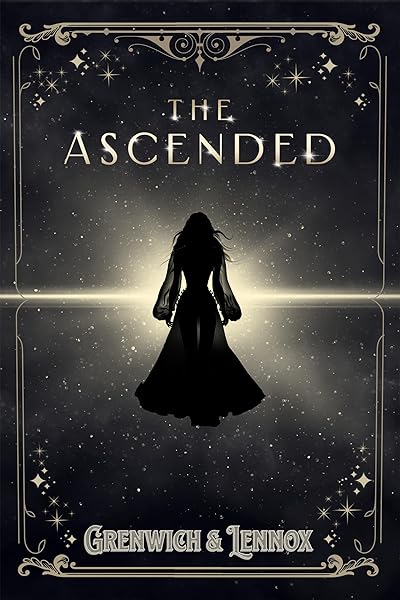
The Ascended (The Aesymarean Duet)
Thriller Blurbs
Thriller blurbs run on urgency and impossible choices. The reader should feel the clock ticking from the first sentence. Your protagonist should be competent but outmatched — a person with skills who's facing something they've never faced before.
The formula: Start with the inciting event (a crime, a discovery, a threat). Establish the protagonist's unique qualification — and their vulnerability. Escalate with a twist or betrayal. End with the ticking clock: what happens if they don't solve this in time.
Key signals thriller readers scan for: pace (how fast will this read?), the type of threat (personal, political, technological), and competence of the protagonist.
Example: Twelve hours ago, cybersecurity analyst Jordan Hale found a dead man's laptop in her mailbox. On it: proof that someone inside the NSA has been selling the identities of undercover operatives to the highest bidder.
Now three people who touched that laptop are dead, Jordan's name is on a federal watch list, and the only person offering to help is a journalist who's been investigating her employer for two years.
The next name on the kill list leaks at midnight. Jordan has twelve hours to find a traitor inside the most secure agency on earth — before she becomes the proof they bury.
Thriller covers that build urgency


Mystery Blurbs
Mystery readers are buying a puzzle. Your blurb should present a question that feels answerable but isn't — and hint that the answer is more disturbing than anyone expects. The detective (professional or amateur) should have a personal connection to the case.
The formula: Present the crime or mystery in its most intriguing form. Introduce the investigator and their personal stake. Layer in the first complication — the detail that doesn't fit. End with the suggestion that solving this case will cost the investigator something personal.
Key signals mystery readers scan for: setting (cozy village, gritty city, historical), detective type (amateur, professional, reluctant), and tone (cozy, noir, procedural).
Example: When retired librarian Edith Bracknell finds a 200-year-old diary hidden inside a donated book, she expects local history. What she finds is a confession — one that names her own family in a murder the town of Hartwick has never heard of.
But the diary's missing its final pages. And someone in Hartwick has been making sure those pages stay missing for a very long time.
Cozy mysteries lean lighter, but the structure is identical: a puzzle the reader wants to solve alongside the protagonist.
Sci-Fi Blurbs
Sci-fi readers want the concept — the "what if?" that makes your story different from every other book on the shelf. But they also want the human cost. The best sci-fi blurbs marry a high-concept premise with a deeply personal story.
The formula: Lead with the concept in one clean sentence. Introduce the protagonist as someone uniquely positioned to confront the concept's consequences. Show what happens when the concept breaks — and what the protagonist must sacrifice to fix it (or survive it).
Key signals sci-fi readers scan for: the concept (time travel, AI, first contact, generation ships), hardness (hard sci-fi vs. space opera), and philosophical depth.
Example: The Remembrance Engine was supposed to end grief. Upload your memories of the dead, and the AI reconstructs them — personality, voice, habits — with 97.3% accuracy. For six years, millions have been living alongside the people they lost.
Then the reconstructions start remembering things the originals never experienced. Conversations they never had. Places they never visited. Dr. Yuki Tanaka, the engineer who built the system, is the first to notice — because her reconstructed mother just described the afternoon of her own murder.
An afternoon no one else witnessed.
Literary Fiction Blurbs
Literary fiction blurbs sell voice and transformation. The reader isn't buying plot — they're buying the quality of the prose and the depth of the emotional experience. Your blurb should read like the opening paragraph of the novel itself.
The formula: Open with a line that demonstrates your prose style. Introduce the protagonist at a point of internal crisis (not external action). Hint at the transformation they'll undergo — without naming it directly. Let the language do the work.
Key signals literary readers scan for: prose quality (is this writer worth spending time with?), emotional intelligence, and thematic ambition.
Example: The summer Margaux turned forty-one, she stopped answering the phone. Not out of rudeness — out of a suspicion, growing stronger each week, that the person on the other end of the line was talking to someone who no longer existed.
A novel about the marriages we inherit, the ones we build, and the quiet violence of realizing they might be the same thing.
Literary blurbs are often shorter — 80 to 150 words. They trust the prose to sell itself, and they lean on thematic description rather than plot mechanics.
7 Blurb Mistakes That Kill Sales
You can follow every formula perfectly and still write a blurb that fails — if you make one of these common mistakes. Each one is drawn from real self-published books with strong writing and weak sales, where the blurb was the bottleneck.
1. Going over 250 words. Blurbs that run 300, 400, even 500 words are surprisingly common among indie authors. The instinct is understandable — you want to convey how rich your story is. But long blurbs signal insecurity, not depth. If you can't sell your book in 200 words, the problem isn't word count — it's focus. The bestselling blurbs across every genre average 150-200 words. Trim ruthlessly.
2. Spoiling the ending. This one seems obvious, but it happens constantly — especially with literary fiction and mystery authors who are proud of their twist. The blurb's job is to open a question, not answer it. If the reader knows how it ends, they have no reason to buy. Never reveal anything past the midpoint of your book.
3. Starting with "In a world where..." This opening has been parodied so thoroughly that it now signals "amateur" before the reader finishes the sentence. It was cliché in 2010. In 2026, it's a red flag. Start with your character, not your setting. Start with an action, a question, or a statement that disrupts expectations.
4. No stakes, no conflict. "Follow Sarah on a journey of self-discovery through the hills of Tuscany." That's not a blurb — it's a travel brochure. If nothing is at risk, the reader has no reason to care. Every blurb needs a clear answer to the question: what does the protagonist stand to lose?
5. Describing the plot instead of selling it. "Chapter 1 introduces the main character. Then she meets her love interest. Then they go on an adventure." This is a chapter outline, not marketing copy. A blurb should make the reader feel something — curiosity, dread, longing, excitement. If your blurb reads like a book report, rewrite it as a movie trailer.
6. Using author quotes nobody recognizes. "A stunning debut!" — Jane Doe, Author of Unknown Book. Social proof only works when the reader recognizes the source. A quote from a NYT bestseller or a major publication carries weight. A quote from your critique partner does not. If you don't have recognizable endorsements, skip the quotes entirely and use that space for stronger copy.
7. Forgetting the genre keywords Amazon needs. Amazon's A9 search algorithm indexes your blurb text. If your dark romance blurb never mentions "enemies-to-lovers" or "forced proximity," you're invisible to readers searching for those tropes. Weave 2-3 genre keywords naturally into your blurb — not as a keyword-stuffed list, but as organic descriptors. "A slow-burn enemies-to-lovers romance" is both a genre signal for readers and an SEO signal for Amazon.
Amazon-Specific Blurb Optimization
Writing a great blurb is step one. Formatting it for Amazon is step two — and most indie authors skip it entirely, leaving sales on the table.
HTML formatting in KDP descriptions. Amazon's book description field accepts basic HTML: <b> for bold, <i> for italics, <br> for line breaks, and <h2> for subheadings (rendered as bold text). Use bold to highlight your hook line and key emotional beats. Use italics for taglines and comparison lines. A wall of unformatted text looks amateur next to a properly formatted description.
The first 4 lines are everything. On a desktop Amazon product page, only the first 4-5 lines of your description are visible before the "Read more" fold. On mobile, it's even less — roughly 2-3 lines. These visible lines are your entire pitch to the majority of shoppers who never click "Read more." Front-load your strongest hook, your genre signals, and your emotional promise into those opening lines.
Include genre keywords for Amazon's A9 algorithm. Your blurb is indexed by Amazon's search engine. Beyond your 7 backend keywords, the words in your description influence which searches surface your book. If you write cozy mysteries, your blurb should naturally include phrases like "small-town mystery," "amateur sleuth," or "quirky characters." Don't keyword-stuff — but don't ignore search intent either.
Comparison taglines work. "Perfect for fans of Colleen Hoover and Emily Henry" or "If you loved Fourth Wing, you'll devour this" — these lines do three things at once. They set reader expectations (genre, tone, heat level). They borrow credibility from established authors. And they help Amazon's recommendation engine associate your book with those authors' audiences. Place the comparison line near the top of your blurb, where it's visible before the fold.
Social proof at the end. If you have it — a starred review from Kirkus, a BookTok recommendation, an award — place it at the bottom of your description as a closing reinforcement. Don't lead with it (the reader doesn't care about awards until they're already interested in the book). A simple format works: "A propulsive, unputdownable thriller." — Publishers Weekly
Test your formatting. After publishing, open your book's Amazon page in both desktop and mobile browsers. Check that bold text renders correctly, line breaks appear where you intended, and the "Read more" fold doesn't cut off mid-sentence. KDP's preview doesn't always match the live page.
AI Blurb Writing: When to Use It
AI can write a competent first draft of a blurb in seconds. It knows the formulas, it understands genre conventions, and it won't stare at a blank page for three hours. For many indie authors, AI blurb generators have become an essential part of the publishing workflow.
But there's a right way and a wrong way to use AI for blurbs.
The right approach: generate, then polish. Use AI to produce 3 variant blurbs from your synopsis and genre. Read all three. One will have the best hook. Another will have the strongest conflict escalation. A third might nail the voice. Take the best elements from each, combine them, and rewrite in your own voice. The AI gives you raw material and structure — you add the personality and precision.
Why multiple variants matter. A single AI-generated blurb will be competent but generic. It'll hit the formula beats without any distinctive flavor. By generating 3 variants, you get different angles on the same story — different hooks, different emotional tones, different structural choices. The comparison reveals which approach is strongest for your specific book.
What AI does well: structure (the 3-act formula), genre conventions (trope keywords, tone signals), and conciseness (AI rarely rambles in a blurb). What AI does poorly: voice. An AI blurb will sound professional but anonymous. The sentences will be clean but forgettable. Your job is to inject the same voice that makes your novel worth reading.
Try the AI Blurb Writer — generate 3 variants from your synopsis in seconds →
A warning: do not publish AI-generated blurbs unedited. They're a starting point, not a finished product. Readers can often sense generic marketing copy — and in a genre where voice is a selling point (romance, literary fiction, humor), a flat blurb actively works against you. Use AI for the structure. Use your brain for the soul.
Blurb Revision Checklist
Before you publish your blurb — whether you wrote it from scratch, polished an AI draft, or hired a copywriter — run it through this checklist. Every "no" is a weak point that could cost you sales.
Does it hook in the first sentence? Read your opening line in isolation. If it doesn't create curiosity, urgency, or an emotional reaction, rewrite it. The first sentence is your blurb's blurb — it sells the reader on reading the rest.
Is there clear conflict? Can you point to the exact sentence where the obstacle appears? If the blurb is all setup and no conflict, it reads like a premise rather than a story. The conflict is what makes the reader think, "I need to know what happens."
Are the stakes personal? "The world is in danger" is less compelling than "she'll lose the only person who ever believed in her." Global stakes feel abstract. Personal stakes feel urgent. Even in epic fantasy, the blurb should connect the world-level threat to something the protagonist personally stands to lose.
Does it end with a question or cliffhanger? The last line of your blurb is the last thing the reader processes before deciding to buy or bounce. If it resolves the tension, you've given them closure without the book. End on an open loop — a question, an impossible choice, a line that makes the next action feel inevitable.
Is it under 250 words? Count them. If you're over, cut. Start by removing any sentence that describes setting without advancing conflict. Then cut any sentence that tells the reader how to feel ("a heartwarming tale of...") instead of making them feel it.
Does it match your genre's conventions? Read the blurbs of the top 10 books in your Amazon subcategory. Does yours hit the same signals? If every competing blurb mentions tropes and yours doesn't, you're speaking the wrong language. If every competing blurb is 120 words and yours is 300, you're over-explaining.
Would YOU click "Buy Now" after reading it? This is the only test that truly matters. Read your blurb as if you've never heard of your book. As if you're a reader scrolling through Amazon at midnight, half-awake, looking for something to read. Does this blurb stop your scroll? Does it make you curious enough to spend $4.99? If the honest answer is "maybe" — revise until it's "yes."
A blurb is never finished. It's the most revisable piece of your book's marketing. Track your click-through rate on Amazon ads, run A/B tests with different opening lines, and keep refining. The authors who sell consistently aren't the ones who write the best blurbs on the first try — they're the ones who never stop improving them.
Try Our AI Writing Tools
Generate blurbs, plot outlines, and more — designed for pantsers.
Try the Blurb WriterRelated Articles
Genre-specific blurb formulas with real examples. Romance emotional stakes, thriller ticking clocks, fantasy world hooks, mystery question openers — plus the word count and structure that convert browsers into buyers.
Master Amazon book description formatting, keyword placement, above-the-fold optimization, A+ content, and mobile vs desktop display. Data-backed strategies from 2,500+ books analyzed.
Unlock the power of an AI blurb writer for books. Learn how to craft compelling, data-backed book blurbs that captivate readers and boost sales. Get actionable tips!