
Story Structure for Pantsers: The Flexible Framework
Why pantsers still need structure (but not outlines), the 4-act intuitive structure, scene-level beats, tension management, and the retrospective outline technique.
Structure Is Not the Enemy of Discovery
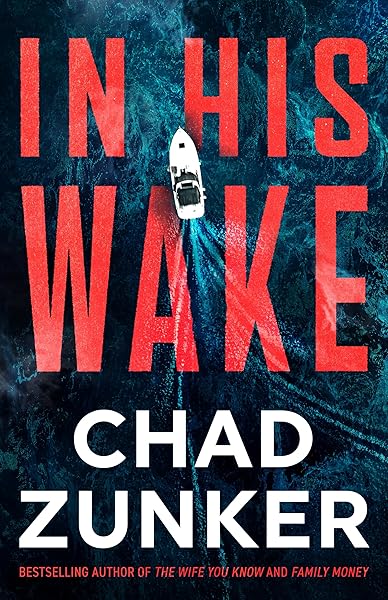
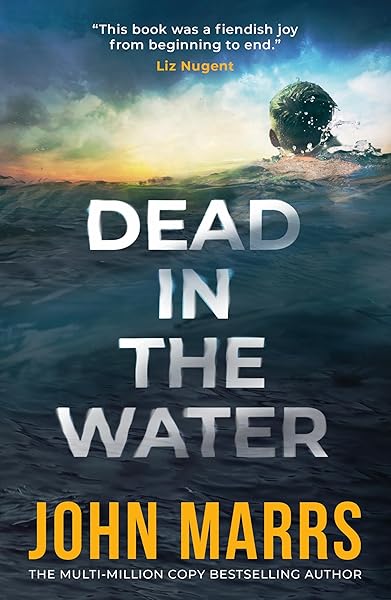
Thrillers — the most structurally demanding genre



Pantsers hate outlines. This is non-negotiable. But many pantsers make a critical error: they conflate outline with structure, and reject both.
An outline is a pre-determined plan. It tells you what happens in chapter 7 before you've written chapter 1. For a discovery writer, this kills the creative process — why write a scene when you already know what happens?
Structure is something different entirely. Structure is the underlying architecture that makes a story feel like a story. It's the reason readers feel tension building in the middle, satisfaction at the climax, and closure at the end. Structure isn't a plan — it's a pattern. And patterns can be discovered just as easily as they can be planned.
Think of it this way: a river has structure. It flows downhill, gathers tributaries, narrows through canyons, widens into deltas. No one designed that structure — it emerged from the physics of water and landscape. But the structure is real, and it's what makes the river a river instead of a random puddle.
A pantsed novel works the same way. The structure emerges from the physics of character and conflict. If you understand those physics — even loosely, even intuitively — your discovery writing will naturally produce structured stories. You don't need to plan the structure. You need to feel it.
This article teaches you to feel it. Not by giving you a rigid framework to impose on your writing, but by showing you the structural patterns that exist in every successful story — so you can recognize when your draft is following them and when it's drifted away.
The 4-Act Intuitive Structure
The three-act structure is the most taught story framework. It's also the most misused by craft books, because they present it as a planning tool. Here's a different take: a four-act intuitive structure designed not for planning but for feeling where you are in your story.
Why four acts instead of three? Because the traditional second act is enormous — it's 50% of the novel — and the reason most pantsers lose momentum in the middle is that "Act 2" is too vague to feel intuitively. Splitting it into two halves gives you a clearer sense of where the energy should be at any point in the draft.
Act 1: The Hook (roughly the first 20% of your novel)
This is the part you already do naturally. You introduce the character, the world, and the situation. You establish the normal — and then you disrupt it. The disruption isn't something you plan; it's the thing that made you want to write this story in the first place. Every pantser starts with a disruption, even if they don't frame it that way. A murder. A meet-cute. A strange letter. A door that shouldn't exist.
What to feel for: pull. If the opening 20% of your draft makes you want to keep writing, it's working. If it feels like setup — if you're explaining rather than experiencing — the hook isn't sharp enough. The rule of thumb: the disruption should happen before page 30. Earlier is almost always better.
Act 2A: The Exploration (roughly 20-45% of your novel)
This is where the pantser's strengths shine. After the disruption, the protagonist explores the new situation. In a mystery, they investigate. In a romance, they navigate the attraction. In a fantasy, they discover the new world or power. This act is about expansion — new characters, new complications, new information. The story is getting bigger.
What to feel for: curiosity. If you're curious about what your character will discover or encounter next, the exploration is working. If you're bored, the expansion has gone too wide — you need a complication that focuses the story. This is where many pantsers introduce too many subplots. The fix: every new element should connect (even loosely) to the protagonist's central want or fear.
Act 2B: The Compression (roughly 45-75% of your novel)
This is where most pantsers struggle — and it's the most important act to feel. After the midpoint (around 50%), the story should shift from expansion to compression. Options narrow. Escape routes close. The protagonist's situation gets worse, not better. Subplots start converging. Allies are lost or revealed to be unreliable. The comfortable distance between the protagonist and their fear collapses.
What to feel for: pressure. If the second half of your middle feels like a vice tightening, you're on track. If it feels like more of the same — more exploration, more tangents, more "and then this happened" — the compression hasn't kicked in. The fix: take something away from your protagonist. Remove a resource, betray a trust, reveal an ugly truth. Compression happens when the protagonist loses ground.
Act 3: The Reckoning (roughly the final 25% of your novel)
The protagonist faces the thing they've been avoiding. The want and the fear collide. The blind spot is exposed. This act is about confrontation — not necessarily physical (though it can be), but emotional. The protagonist must make a choice that defines who they are. In a romance, it's the vulnerability of commitment. In a thriller, it's the final confrontation at personal cost. In literary fiction, it's the moment of painful self-knowledge.
What to feel for: inevitability. The ending should feel like the only possible conclusion to this specific story with these specific characters. Not predictable — inevitable. There's a difference. Predictable means the reader sees it coming from chapter 3. Inevitable means the reader thinks "of course" when they reach the final page — it couldn't have ended any other way, but they didn't know that until they got there.
How to use this: Don't plan these acts. Just check in periodically as you write. "Am I still in exploration mode, or has compression started?" "Have I taken something away from my protagonist recently?" "Does the pressure feel like it's building?" These questions keep your discovery writing structurally sound without imposing an outline.
Scene-Level Beats: The Micro-Structure of Discovery
Structure doesn't only operate at the novel level. Every scene has its own micro-structure — and understanding it is what separates a compelling scene from a flat one. For pantsers, scene-level beats are more useful than act-level structure because they operate at the scale you actually write at: one scene at a time.
The essential scene beat: a shift in value.
Every effective scene changes something. A character's situation, understanding, relationship, or emotional state shifts from one condition to another. Hope to despair. Ignorance to knowledge. Trust to suspicion. Safety to danger. If nothing changes, the scene is either setup (tolerable in small doses) or filler (always cuttable).
You don't need to plan the shift before writing the scene. But as you write, ask: what changed? If you reach the end of a scene and nothing has shifted, something needs to happen. This is the pantser's most reliable course-correction tool — not "what should happen next according to the outline" but "what needs to change in this scene to justify its existence."
Three micro-beats within each scene:
1. The want. The character enters the scene wanting something. It can be enormous (find the killer) or tiny (get through dinner without an argument). But they want something. If you don't know what your character wants in this scene, you don't know enough to write the scene yet. This is the only "planning" a pantser needs to do: know the want before writing the scene's first line.
2. The obstacle. Something prevents the character from getting what they want. This can be external (another character, a physical barrier, a piece of information) or internal (fear, doubt, a moral dilemma). The obstacle creates tension — the gap between want and reality that keeps the reader engaged.
3. The turn. The scene shifts. The character either gets what they want (but at an unexpected cost), doesn't get it (and must recalibrate), or discovers that what they wanted isn't what they actually need. The turn is the moment that justifies the scene. It's what the reader will remember.
These three beats — want, obstacle, turn — don't require planning. They require attention. As you write, you're naturally generating wants, obstacles, and turns. The craft is noticing when a scene is missing one of the three and adjusting in the moment.
Quick scene check: After writing a scene, ask three questions. What did the character want? What stopped them? What changed? If you can answer all three, the scene works. If you can't, the scene needs more tension, a clearer obstacle, or a sharper turn.
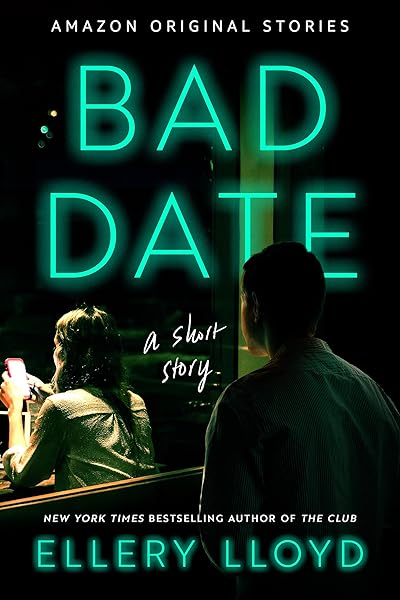
Mystery — every scene must turn the investigation

Tension Management: The Invisible Architecture
If there's one structural element that separates published novels from abandoned drafts, it's tension management. Not plot complexity, not character depth, not prose quality — tension. The reader's sense that something is at stake, that something could go wrong, that the outcome is uncertain.
Plotters manage tension through careful placement of plot points at specific percentages. Pantsers manage tension through feel — and it's a skill that improves with practice.
The tension thermometer:
At any point in your draft, your story has a tension level. Think of it on a scale of 1-10. The pattern you're aiming for (even though you're not planning it) looks like this:
Opening: 3-4 (interesting enough to keep reading, not so intense it's exhausting).
After the disruption: 5-6 (something is at stake, the situation is unstable).
Exploration: fluctuates between 4-7 (individual scenes rise and fall, but the baseline trends upward).
Midpoint: spike to 7-8 (a revelation, reversal, or escalation that raises all stakes).
Compression: 6-9, trending upward (the vice tightens, few moments of relief).
Climax: 9-10 (maximum stakes, maximum uncertainty).
Resolution: drops to 2-3 (release, closure, emotional landing).
You don't need to consciously track these numbers. But you need to feel the pattern. If you're at the 60% mark and the tension level feels like a 3, something needs to go wrong for your protagonist. If you're at 30% and the tension is already at 9, you've escalated too fast — where do you go from here?
Tension valves — when to release pressure:
Constant high tension exhausts readers. You need moments of relief — scenes where tension drops temporarily before climbing again. Humor is a tension valve. A quiet character moment is a tension valve. A scene of temporary safety is a tension valve. The key: the valve should be brief and should introduce new information or deepen character — it's a rest, not a detour.
The pantser's tension trap:
Pantsers have a specific tension problem: the interesting tangent. You're writing a scene, and a fascinating but low-tension idea presents itself. A character's backstory. A world-building detail. A philosophical digression. The writing feels good — the prose is flowing, the ideas are rich — but the tension is dropping because nothing is at stake in this moment. The fix: keep the tangent to one paragraph or one page, then return to a scene with active stakes. Interesting ≠ tense, and readers need tension to keep turning pages.
Tension check: At the end of every writing session, ask: "Is the tension level higher, lower, or the same as when I started?" If it's the same or lower for two sessions in a row, your story needs a complication. Something must get worse. Dear Pantser's Plot tool can generate complications tailored to your story's current state.
The Retrospective Outline: Structure After the Fact
Here's the technique that reconciles pantsing with structure, and it's the most powerful revision tool a discovery writer can use.
The retrospective outline is exactly what it sounds like: an outline created after the draft is complete. You write first. You discover the story. Then you map what you discovered.
How to create a retrospective outline:
Open a new document. For each chapter (or scene, for shorter fiction), write:
1. One-sentence summary of what happens
2. POV character and what they want in this chapter
3. What changes — the value shift (hope→despair, safety→danger, etc.)
4. Tension level (1-10)
5. Threads active — which subplots or story threads are being advanced
This takes 2-3 hours for a typical novel-length draft. The result is a map of the story you actually wrote — and it will reveal the structure your subconscious built.
What the retrospective outline reveals:
Pacing problems. If five chapters in a row have the same tension level, the pacing is flat. If the tension spikes at 30% and never recovers, you've peaked too early. The tension column makes these problems immediately visible.
Thread gaps. If a subplot or character disappears for 100 pages, the "threads active" column will show a gap. You may need to add a scene that keeps that thread alive in the reader's mind, or you may decide the thread was a tangent and cut it.
Missing value shifts. If multiple scenes have the same "what changes" entry (or worse, no change), those scenes may be redundant or underdeveloped. Every scene should move the story — the retrospective outline shows you which ones don't.
The story's actual structure. Once you've completed the retrospective outline, you'll see your novel's natural act breaks, midpoint, and climax. They may not fall at textbook percentages — and that's fine. What matters is that the pattern exists: expansion, compression, confrontation, resolution. If the pattern is there, your instincts served you well. If it's not, you know exactly where to restructure in revision.
Retrospective outline as a living tool:
Some pantsers create retrospective outlines not just at the end but at multiple points during the draft — typically at 30%, 50%, and 80%. This gives them structural awareness without pre-planning. You're not outlining the future — you're mapping the past, and using that map to navigate the present.
Try it now: If you have a work-in-progress, spend one session creating a retrospective outline of everything you've written so far. Map the tension levels. Find the thread gaps. Identify the value shifts. You'll understand your own story better than you did yesterday — and tomorrow's writing session will benefit from the clarity. Dear Pantser's Plot tool can help you analyze your existing draft and identify structural patterns.
Fantasy — complex threads need tracking

On Wings of Blood: A Novel (Bloodwing Academy Book 1)

Rain of Shadows and Endings (The Legacy)

A Tongue so Sweet and Deadly (The Compelling Fates Saga)

Shield of Sparrows: An Enemies-to-Lovers Epic Romantasy

We Who Will Die: An Epic Romantasy of Forbidden Love, Deadly Secrets, and Vampires in a High-Stakes Arena, Discover a Vividly Reimagined Ancient Rome (Empire of Blood Book 1)
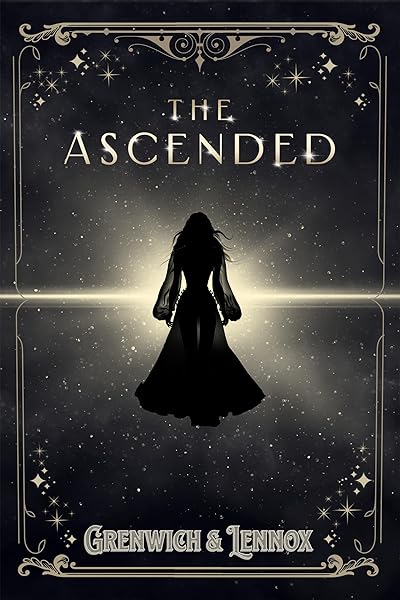
The Ascended (The Aesymarean Duet)
Thriller — tension must escalate relentlessly
Genre-Specific Structure: What Readers Expect
Every genre has structural expectations that readers enforce through reviews, readthrough rates, and word-of-mouth. A pantser doesn't need to plan these structural beats — but they need to know they exist, so they can recognize when their discovery writing has naturally produced them (or missed them).
Romance:
Readers expect a happily ever after (HEA) or a happy for now (HFN). This is the genre's one non-negotiable structural requirement. Every romance must also include: an initial meeting or reconnection, growing attraction despite obstacles, a "dark moment" (the relationship seems impossible), and resolution. Pantsers can discover the path to HEA organically — but you must reach it. A romance that ends ambiguously or unhappily will receive devastating reviews regardless of how well-written it is.
Mystery/Thriller:
Readers expect a resolution of the central question — who did it, will they survive, can the threat be stopped. The resolution must be fair (the clues were available to the reader, even if hidden) and satisfying (the protagonist's actions matter to the outcome). Pantsers writing mystery often discover the solution while writing, which can produce wonderfully surprising resolutions — but you must go back in revision and plant the clues retroactively.
Fantasy:
Readers expect a fully realized world with consistent rules. This is the hardest genre for pantsers because world-building demands consistency, and discovery writing produces contradictions. The fix: a story bible maintained during writing (see the AI plot generator guide for how AI can help). Readers also expect a clear stakes escalation — the final confrontation must be the biggest challenge, not just another fight.
Literary Fiction:
Readers expect character transformation. The protagonist must change — not necessarily for the better, but significantly. Literary fiction allows more structural freedom than any other genre, but the emotional arc must be present. A literary novel can have an ambiguous ending, a nonlinear timeline, and an unconventional structure — as long as the protagonist's inner journey is complete.
Know your contract: Before writing in a genre, read 10 bestsellers and note the structural beats they share. You don't need to plan these beats — but you need to recognize them. When your draft is missing a genre-expected beat, add it in revision. Explore genre conventions for romance, mystery, fantasy, and more.
Putting It All Together: The Pantser's Structural Toolkit
You don't need an outline. You do need awareness. Here's your toolkit — the structural concepts a pantser should keep in the back of their mind (not the front) while writing.
Before you start writing:
Know your character's want, fear, and blind spot. Know your starting situation. Feel the disruption that kicks off the story. That's all. Everything else, you'll discover.
While you're writing:
Use scene-level beats (want, obstacle, turn) to keep every scene purposeful. Check the tension thermometer periodically — is the pressure building? Use the four-act framework as a compass, not a map — "Am I in exploration or compression?" Take something away from your protagonist every 5-8 chapters to keep the stakes rising.
When you get stuck:
Ask: "What's the worst thing that could happen to this character right now?" Or: "What would they do if they had to choose between their want and their fear?" These questions generate momentum because they're rooted in character, not plot mechanics.
At periodic checkpoints (every 30% of your estimated word count):
Create a mini retrospective outline of what you've written so far. Map tension levels. Identify active threads. Note which threads are converging and which are drifting. This takes 30 minutes and gives you structural awareness without restricting your discovery.
After the first draft:
Create a full retrospective outline. Find the structure your subconscious built. Identify gaps, dead zones, and missing genre beats. Restructure in revision — move scenes, cut tangents, add escalation where the tension line is flat.
This is the flexible framework. It doesn't tell you what to write. It helps you understand what you've written and refine it into a story that satisfies both the writer's need for discovery and the reader's need for structure.
Start discovering: Dear Pantser's Plot Generator is designed for this exact workflow. Generate story seeds without rigid outlines. Brainstorm complications when you're stuck. Analyze your existing draft for structural patterns. Every tool supports discovery writing — because the best stories aren't planned. They're found.
Every one of these bestsellers has structure — none required an outline


Try Our AI Writing Tools
Generate blurbs, plot outlines, and more — designed for pantsers.
Try the Blurb WriterRelated Articles
Unlock the power of an AI blurb writer for books. Learn how to craft compelling, data-backed book blurbs that captivate readers and boost sales. Get actionable tips!
How AI plot generators work for discovery writers who don't outline. Practical workflows, tool comparisons, and how to maintain creative control while using AI.
Master Amazon book description formatting, keyword placement, above-the-fold optimization, A+ content, and mobile vs desktop display. Data-backed strategies from 2,500+ books analyzed.