
How to Plot a Novel Without an Outline (2026)
A complete guide to writing a novel without outlining. Discovery writing techniques, the headlights method, character-driven plotting, famous pantsers, and practical exercises.
The Case for Writing Without an Outline
Mystery — a genre built on discovery, for writers and readers

What She Saw

Beautiful Venom: A Dark Hockey Romance (Vipers Book 1)

Death to Valentine's Day (The Improbable Meet-Cute: Second Chances)

The Oligarch's Daughter: A Breakneck Spy Thriller

The Good Samaritan

When You Disappeared
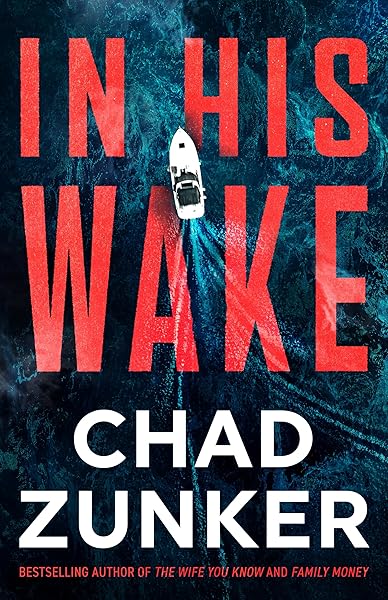
In His Wake
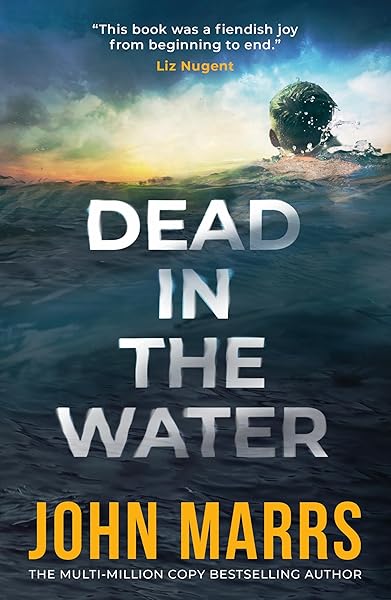
Dead in the Water

No One Knew (Noelle Marshall Book 2)
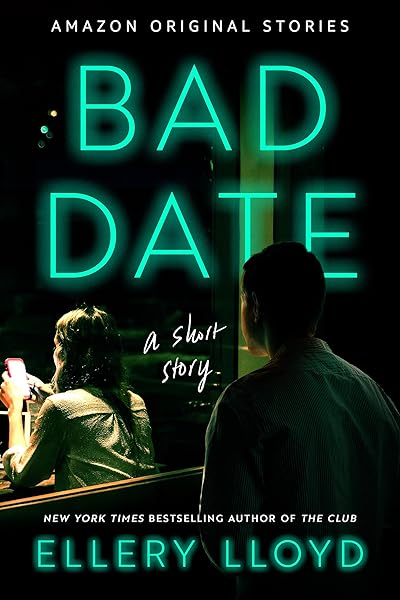
Bad Date: A Short Story
Every writing craft book, every NaNoWriMo guide, every MFA program says the same thing: outline first, write second. Plan your three acts. Map your beats. Know your ending before you begin. It's presented as universal wisdom — the responsible, professional way to write a novel.
And for about 30% of writers, it's exactly right.
For the rest of us, it's creative poison.
If you've ever abandoned a novel because the outline killed your enthusiasm — you're a pantser. If you've ever started writing a scene that wasn't in the plan and felt the story come alive for the first time — you're a pantser. If the idea of knowing the ending before you start writing makes the entire project feel pointless, like reading the last page of a mystery first — you're a pantser.
Discovery writing (also called "pantsing," from "flying by the seat of your pants") is not a lack of method. It is a method. It's how Stephen King, Margaret Atwood, George R.R. Martin, Toni Morrison, Ray Bradbury, and Neil Gaiman work. These aren't amateurs who haven't learned the "proper" way to write. They're masters who understand something that outline-first advice misses: for certain writers, the act of writing IS the act of discovery.
This guide is for those writers. Not a defense of pantsing — it doesn't need defending. A practical manual for how to write a complete, structurally sound novel without ever creating an outline.
The Headlights Method: See Only as Far as You Need
Stephen King describes his writing process with a metaphor: driving at night with headlights. You can see only 200 feet ahead. You don't need to see the whole road — just enough to keep moving. You trust that the road continues beyond the headlights, and you'll see each new section when you get there.
This is the foundational technique for writing without an outline. You don't need to know where the story is going. You need to know what happens in the next scene.
How to practice the headlights method:
At the end of each writing session, ask yourself one question: "What is the most interesting thing that could happen next?" Not the most logical. Not the most structurally appropriate. The most interesting. Write down a single sentence — a seed for tomorrow's session. That's it. That's your entire plan.
Tomorrow, you start with that seed. You write the scene. As you write, the scene generates new questions, new complications, new possibilities. At the end of the session, you ask the same question again. And the next day, you start again.
The headlights method works because it leverages the pantser's greatest strength: creative responsiveness in the moment. You're not executing a plan — you're responding to the story as it unfolds. Each scene is a reaction to the previous scene, which means the narrative has an organic, cause-and-effect logic that outlines often lack. Plot points feel earned because they emerge from character and situation, not from a predetermined structure.
The objection — and the answer:
"But what if the road leads to a dead end?" It sometimes does. And that's fine. Dead ends in a first draft are not failures — they're information. They tell you what doesn't work, which is as valuable as knowing what does. When you hit a dead end, you back up to the last point where the story felt alive and take a different fork. You haven't wasted time — you've eliminated a possibility, and that makes the remaining possibilities stronger.
Exercise: Open your current work-in-progress (or start a new one). Read the last page you wrote. Close the file. On a blank page, write: "The most interesting thing that could happen next is ___." Fill in the blank with the first idea that excites you. Don't evaluate it. Just write the scene. That's today's writing session.
Character as Compass: Letting People Drive Plot
Every pantser eventually discovers the same truth: character is the engine of discovery writing. When you know your character deeply enough — their desires, fears, contradictions, and blind spots — the plot generates itself. You don't need to plan what happens because you know what this person would do in any given situation.
The character depth threshold:
There's a point in character development where a character stops being a concept and starts being a person. Before that threshold, you're deciding what the character does. After it, the character is deciding — and you're transcribing. Every experienced pantser knows this feeling. It's the moment when writing stops feeling like work and starts feeling like channeling.
How do you reach that threshold? Not through character worksheets. Not through listing eye color, favorite food, and astrological sign. Those are facts, not character. You reach the threshold by understanding three things:
1. What do they want more than anything? Not their surface goal (solve the case, win the love interest, defeat the villain). Their deep want. The emotional need driving everything they do. A detective who wants to prove she's as good as her dead father. A romance protagonist who wants to believe she deserves love after being told she doesn't. A fantasy hero who wants to matter in a world that treats them as invisible. This deep want generates every decision, every reaction, every conflict.
2. What are they most afraid of? The fear that contradicts the want. The detective is afraid of discovering her father wasn't the hero she believes he was. The romance protagonist is afraid that intimacy will confirm what the abuser told her. The fantasy hero is afraid that they actually don't matter. This fear creates the internal tension that drives the story even when external events are quiet.
3. What is their blind spot? The thing they can't see about themselves. The detective doesn't realize her obsession with her father's legacy is pushing away the living people who matter. The romance protagonist doesn't see that her self-protection is the thing preventing the connection she craves. The fantasy hero doesn't recognize that their desire to matter has become a dangerous hunger for power.
When you know these three things, the plot writes itself. Put the character in a situation that activates their want, triggers their fear, and exposes their blind spot — and their response is the story. You don't need to plan it because it's inevitable.
Exercise: For your protagonist, write one paragraph answering each of the three questions above. Don't outline a plot. Just know the character. Then write a scene where they're forced to choose between what they want and what they fear. The story that emerges from that choice is your novel's engine.
The Situation + Pressure Formula
If character is the engine, situation is the fuel. And pressure is the accelerator.
Pantsers don't need to know the plot. They need to know the starting situation — a character in a specific circumstance that creates inherent narrative pressure. The better the starting situation, the less planning you need, because a pressurized situation generates its own plot through cause and effect.
What makes a good starting situation:
A good starting situation has three properties: it's unstable (something must change), it's personal (the protagonist has emotional stakes), and it's escalatable (things can get worse). If your starting situation has all three, the story will generate momentum without an outline.
Examples from published novels:
The Shining (Stephen King): A recovering alcoholic with anger issues takes a winter caretaker job at an isolated hotel with his wife and young son. Unstable: the isolation will test his sobriety. Personal: his family is at stake. Escalatable: the hotel has supernatural elements that prey on weakness. King didn't outline this novel — he put Jack Torrance in a pressure cooker and watched what happened.
Gone Girl (Gillian Flynn): A husband reports his wife missing on their fifth anniversary. Unstable: the marriage was already failing. Personal: he's the prime suspect. Escalatable: every new revelation makes things worse. Flynn has described her process as discovering the twists while writing — the situation generated the plot.
The Hunger Games (Suzanne Collins): A girl volunteers to fight to the death in place of her younger sister. Unstable: she must kill or be killed. Personal: she's sacrificing herself for family. Escalatable: the games are televised, adding political pressure to survival pressure. The situation alone generates an entire novel's worth of conflict.
How to create your own pressurized situation:
Take your character (with their want, fear, and blind spot). Place them in a circumstance that:
1. Threatens what they want or forces them to pursue it in a risky way
2. Brings them closer to the thing they fear
3. Makes their blind spot dangerous
Then start writing. The situation will do the rest.
Exercise: Write your starting situation in one sentence: "[Character] must [action] because [stakes], but [complication]." If that sentence makes you want to start writing, you have a novel. If it doesn't, the situation needs more pressure. Try Dear Pantser's Plot Generator to brainstorm pressurized starting situations for your genre.
When to Course-Correct (and When to Trust the Mess)
Every pantser reaches a point — usually around the 30,000-word mark — where the story feels like it's falling apart. Threads are dangling. The pacing is uneven. A character introduced in chapter 4 hasn't appeared since chapter 7. The protagonist seems to have forgotten their original goal. A subplot has consumed three chapters with no connection to the main story.
This is normal. This is not a sign that pantsing doesn't work. This is the messy middle, and every discovery writer experiences it.
The question is: when do you course-correct, and when do you push through the mess?
Course-correct when:
You've lost the character. If you don't know what your protagonist wants anymore — if their actions feel random rather than driven — stop writing forward and spend a session re-centering on character. Write a journal entry in their voice. Write a scene that's just them thinking. Reconnect with their want, fear, and blind spot. Once you have the character back, the plot will follow.
A subplot has no emotional connection to the main story. If a subplot exists only because it seemed interesting at the time and has no thematic or emotional link to the protagonist's journey, it's a tangent. You don't have to delete it immediately — but stop investing in it. Let it fade and refocus energy on the threads that connect to the main story's emotional core.
You're bored. This is the most reliable signal. If you're bored writing a scene, the reader will be bored reading it. Skip ahead to the next scene that excites you. Leave a "[something happens here]" placeholder and move on. You can fill the gap in revision — or you might discover the gap didn't need filling.
Trust the mess when:
You're confused but still curious. Confusion is different from boredom. If you don't know where the story is going but you're genuinely curious to find out — keep writing. Your subconscious is processing something that your conscious mind hasn't caught up with yet. The confusion is often the precursor to a breakthrough.
Threads seem unrelated but feel important. Sometimes you introduce elements that don't seem to connect to anything. A detail about a secondary character. A scene in an unusual location. A conversation that wanders. If these moments feel important even though you can't explain why, trust that feeling. Your storytelling instinct is planting seeds that will bloom later. Some of the best plot connections in fiction were discovered by pantsers who trusted elements that seemed random at the time.
The word count is still growing. If you're producing 500-1,500 words per session even though the story feels chaotic, the process is working. Messy pages can be revised. Blank pages cannot. Forward momentum through confusion is a feature of the pantser process, not a bug.
The 30,000-word checkpoint: At 30,000 words, take one session to read everything you've written (without editing). List the threads that feel alive and the ones that feel dead. Don't outline the rest of the book — just identify what's working. Then write the next session focusing on the alive threads. This is course correction, not planning.
Famous Pantsers and Their Methods
The idea that serious writers outline is a myth. Here's how some of the most successful authors in history work without outlines.
Stephen King
King is the most vocal advocate of discovery writing. In On Writing, he describes his method: "I distrust plot for two reasons: first, because our lives are largely plotless... and second, because I believe plotting and the spontaneity of real creation aren't compatible." King starts with a situation and a character, then writes to find out what happens. The Stand, It, The Shining, and dozens of other novels were written this way. His output: over 65 novels and 200 short stories. The process works at industrial scale.
Margaret Atwood
Atwood has described her process as writing to discover the story's shape: "I don't know the ending until I get there." The Handmaid's Tale, one of the most structurally tight novels in modern fiction, was written without an outline. Atwood trusts the story to reveal its structure through the writing process, and her body of work — spanning five decades and dozens of novels — validates this approach.
George R.R. Martin
Martin famously distinguishes between "architects" (plotters) and "gardeners" (pantsers). He's a gardener: "I think there are two types of writers, the architects and the gardeners. The architects plan everything ahead of time... The gardeners dig a hole, drop in a seed and water it." A Song of Ice and Fire's intricate plot web was grown, not architected — which is both its greatest strength (organic complexity) and its greatest challenge (the famously delayed final books).
Ray Bradbury
Bradbury wrote Fahrenheit 451 in nine days on a rented typewriter in a library basement. No outline. No plan. Just a man terrified by the idea of book burning, writing as fast as he could to discover the story. His advice: "Plot is no more than footprints left in the snow after your characters have run by on their way to incredible destinations."
Neil Gaiman
Gaiman's approach varies by project, but his default is discovery: "I'll have a beginning. And sometimes I'll have an ending. I seldom have a middle." American Gods, Coraline, and The Graveyard Book were all written with minimal advance planning. Gaiman describes the process as following the story "into the dark" — writing to find out what's in the darkness, not to illuminate a pre-mapped path.
Toni Morrison
Morrison described starting with an image, a question, or a emotional truth — never a plot outline. Beloved grew from a single historical fact (Margaret Garner's story) and Morrison's question about what a mother's love could drive her to do. The novel's complex, non-linear structure emerged through writing, not through planning.
The common thread: all of these writers trust the creative process over the planning process. They write to discover, not to execute. And their combined output represents some of the most structurally accomplished fiction in history — all without outlines.
Horror — Stephen King's genre, the pantser's proving ground

The First Witch of Boston: A Novel

On Wings of Blood: A Novel (Bloodwing Academy Book 1)

We Who Will Die: An Epic Romantasy of Forbidden Love, Deadly Secrets, and Vampires in a High-Stakes Arena, Discover a Vividly Reimagined Ancient Rome (Empire of Blood Book 1)
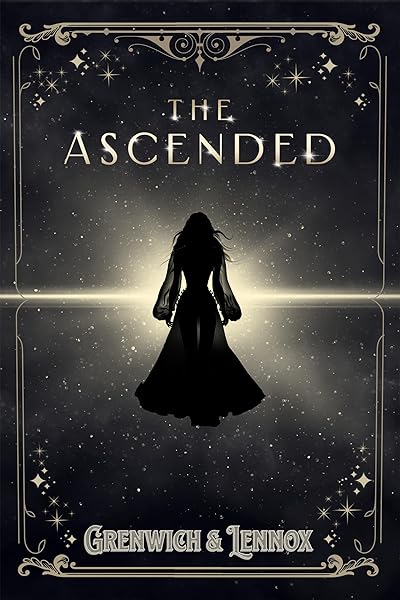
The Ascended (The Aesymarean Duet)

Eldritch (The Eating Woods)

Enchantra: A spicy fantasy romance (Wicked Games Book 2)
Bad Date: A Short Story

Eleven Numbers: A Short Story
Practical Exercises for Discovery Writers
Theory is useful. Practice is essential. Here are six exercises designed specifically for pantsers — each one builds the skills that make outline-free writing work.
Exercise 1: The Five-Minute Character Sprint
Set a timer for five minutes. Write in first person as your protagonist. Don't describe them — BE them. Write about their worst day. The day everything went wrong. Don't plan what you'll write — just start with "The worst day of my life started when..." and see where the character takes you. After five minutes, you'll know this character better than any worksheet could teach you.
Exercise 2: The Wrong Choice
Write a scene where your protagonist makes the wrong decision. Not a stupid decision — a wrong one that makes emotional sense given their fear and blind spot. The detective confronts the suspect alone because she needs to prove she's as tough as her father. The romance protagonist pushes away the love interest because intimacy feels dangerous. The fantasy hero accepts power from a questionable source because they're desperate to matter. Wrong choices drive plot more powerfully than right ones.
Exercise 3: Scene-to-Scene Chains
Write a scene. Any scene. Then ask: "Because this happened, what must happen next?" Write that scene. Then ask again. Chain five scenes together, each one a consequence of the previous one. This exercise builds the cause-and-effect muscle that makes pantsed plots feel logical. After five scenes, you have the beginning of a story — created without an outline, driven entirely by consequence.
Exercise 4: The Collision
Pick two characters who shouldn't meet. Different worlds, different social circles, different goals. Write the scene where they meet for the first time. Don't plan the scene — just put them in a room and see what happens. The tension between incompatible characters generates conflict naturally. This exercise teaches you to trust character dynamics over plot planning.
Exercise 5: The Midpoint Shift
Write a story that changes genre at the midpoint. Start a romance that becomes a thriller. Start a mystery that becomes a ghost story. Start a comedy that becomes a tragedy. This exercise stretches your discovery-writing muscles because you can't plan a genre shift — you have to feel the moment when the story's energy changes and follow it. The results are often the most surprising and compelling writing you'll produce.
Exercise 6: The Ending You Don't Know
Write a story in which you genuinely do not know the ending until you write it. Start with a character and a situation. Write 3,000 words. Then write the ending — whatever feels right in the moment. Don't revise. Don't second-guess. The ending that emerges from 3,000 words of discovery will almost always be more surprising and emotionally true than any ending you could have planned in advance.
Build your writing muscle: Do one exercise per day for a week. By day 7, you'll have 7 story seeds, a deeper understanding of your protagonist, and concrete proof that you can generate compelling narrative without an outline. Ready to turn a seed into a full novel? Dear Pantser's Plot Generator helps you explore possibilities without imposing structure.
From Messy Draft to Finished Novel: The Pantser's Revision Strategy
The pantser's first draft is always messier than a plotter's. This is a feature, not a bug — but it means revision requires a specific approach. You can't just polish prose and fix typos. You need to find the structure your subconscious built and refine it.
Step 1: Read the whole draft without editing (1-2 days).
Print it out or load it on an e-reader. Read it like a reader, not a writer. Don't fix anything. Don't make notes about prose quality. Your only job is to identify two things: what's the story actually about? (theme) and what's the emotional arc? (protagonist's journey from want to transformation). After reading, write one paragraph summarizing each.
Step 2: Create a reverse outline (1 day).
Go through the draft and write a one-sentence summary of each chapter. This is the outline you never made — created after the fact. This reverse outline reveals the structure your subconscious built. You'll see patterns: rising tension, thematic parallels, character mirror moments. You'll also see problems: dead zones, missing escalation, unresolved threads.
Step 3: Identify the load-bearing scenes (1 day).
Using the reverse outline, mark the scenes that carry the story's emotional weight — the moments where the protagonist changes, where relationships shift, where stakes escalate. These are your load-bearing scenes. Everything else is connective tissue. In revision, you'll strengthen the load-bearing scenes and either sharpen or cut the connective tissue.
Step 4: Fix structure before prose (1-2 weeks).
Rearrange scenes if needed. Cut subplots that don't connect to the main emotional arc. Add scenes where escalation is missing. Fill gaps where you used "[something happens here]" placeholders. This structural revision is where the pantser's draft transforms from a discovery document into a novel. Don't touch the prose yet — you might cut or rewrite entire scenes in this pass, so polishing prose now would be wasted effort.
Step 5: Polish prose (1-2 weeks).
Now — and only now — revise at the sentence level. Tighten dialogue. Sharpen descriptions. Fix continuity errors. Ensure each scene has a clear point-of-view and emotional trajectory. This is the pass where the novel becomes readable.
The result: a novel that reads as though it were carefully planned from the beginning, but that retains the organic, surprising quality that only discovery writing can produce.
Your novel is closer than you think. Every bestselling novel started as a messy draft. The difference between a published book and an abandoned manuscript isn't the quality of the first draft — it's the willingness to revise. Start with discovery. Revise with intention. Explore Dear Pantser's writing tools to support every phase of your journey.
Every one of these bestsellers started as a messy first draft


Try Our AI Writing Tools
Generate blurbs, plot outlines, and more — designed for pantsers.
Try the Blurb WriterRelated Articles
How AI plot generators work for discovery writers who don't outline. Practical workflows, tool comparisons, and how to maintain creative control while using AI.
Unlock the power of an AI blurb writer for books. Learn how to craft compelling, data-backed book blurbs that captivate readers and boost sales. Get actionable tips!
Master Amazon book description formatting, keyword placement, above-the-fold optimization, A+ content, and mobile vs desktop display. Data-backed strategies from 2,500+ books analyzed.