
DIY Book Cover vs Hiring a Designer: The Real Math
A data-driven breakdown of DIY, premade, AI, and custom designer book covers — real costs, time investment, quality comparison, and ROI calculations for indie authors.
Your Cover Is Your Most Important Marketing Asset
Before we talk about costs, let's establish why this decision matters so much. Your book cover isn't decoration. It's a conversion mechanism. It's the single asset that determines whether a reader clicks on your book or scrolls past it.
On Amazon — where the vast majority of indie book sales happen — your cover appears as a thumbnail roughly 200 pixels wide. Readers scanning search results or category pages give each cover approximately two seconds of attention. In those two seconds, your cover must accomplish three things: signal the correct genre, convey professional quality, and create enough intrigue to earn a click.
Research consistently shows that cover quality influences more than 50% of purchase decisions for books by unknown authors. That number is even higher for impulse buys in Kindle Unlimited, where the reader doesn't pay per book and has almost no friction to trying something new — making the cover the primary decision factor.
So when we talk about DIY vs designer, we're not discussing a cosmetic preference. We're discussing the asset with the highest leverage on your book's financial performance. The right cover on the wrong book still outsells the wrong cover on the right book.
We analyzed 2,500+ books from Amazon bestseller lists across 27 genre categories to build the cost-benefit framework in this article. Every number comes from real market data, not hypotheticals.
The Four Options: Real Costs Broken Down
Let's get specific. Every indie author has four realistic options for their book cover, each with different trade-offs in cost, time, quality, and control. Here's what each actually costs in 2026.
Option 1: Free DIY ($0 - $15)
Tools like Canva, GIMP, or BookBrush let you build a cover from scratch using stock images and built-in fonts. The monetary cost is near zero — you might spend $5-15 on a stock image from Depositphotos or Shutterstock.
Time cost: 4-12 hours for a first-time designer. More if you're learning the tool simultaneously. Factor in time browsing stock photo sites, experimenting with layouts, and iterating on typography.
Quality reality: Unless you have graphic design training, DIY covers are identifiable as DIY. The most common tells: poor font pairing, insufficient contrast at thumbnail size, amateur text placement, and stock photos that appear on dozens of other covers. Readers have been trained by years of scrolling Amazon to unconsciously recognize these signals. A DIY cover that looks DIY reduces your click-through rate by an estimated 30-60% compared to a professional cover.
When it works: Genuinely never for commercial fiction you intend to sell. Free DIY is appropriate for personal projects, internal documents, or placeholder covers during the writing process. If you're publishing to sell, investing zero in your cover is investing zero in your book's most important marketing asset.
Option 2: AI Cover Generator ($0.50 - $5)
AI generators create unique cover images from text prompts, then compose them with professional typography. The cost per cover is dominated by the API call to the image generation model — typically $0.10-0.50 per image. Generating 8-10 variations and picking the best costs $1-5 total.
Time cost: 15-45 minutes. Most of that time is spent refining your prompt, comparing variations, and adjusting typography. The actual generation takes seconds.
Quality reality: In 2026, a well-prompted AI cover with proper typography is indistinguishable from a premade cover for most genres — and approaching custom designer quality for atmospheric/environmental cover styles. The key differentiator is the typography engine: tools that render text programmatically with real fonts (not AI-generated text) produce professional results. Tools that bake text into the AI image produce amateur results.
When it works: First books, series launches, testing market demand, any genre where AI handles the visual conventions well (fantasy, sci-fi, thriller, horror, literary fiction). The ROI is extraordinary — a $3 cover that converts even 5% better than no cover at all pays for itself instantly.
Option 3: Premade Cover ($50 - $200)
A designer creates a cover using stock imagery and professional typography, then sells it once (exclusively to you). Sites like The Book Cover Designer, GoOnWrite, and individual designers on Etsy or their own sites offer thousands of premade covers across all genres.
Time cost: 1-3 hours browsing and selecting. Some designers offer minor customization (font changes, color adjustments) included in the price. Major changes require additional fees.
Quality reality: Consistently professional. Premade covers are designed by people who understand genre conventions, typography, and composition. The limitation is fit — you're selecting from existing designs, not getting something custom-built for your book. You might find a premade that's 85% right but not 100% right for your specific story.
When it works: Authors who want guaranteed professional quality without the cost of custom design. Particularly strong for genres with well-established visual conventions (romance, thriller, cozy mystery) where premade designers know exactly what readers expect.
Option 4: Custom Designer ($300 - $1,500)
A professional designer creates your cover from scratch. They discuss your book, research your genre's market, source or create imagery, design the typography, and deliver print-ready files. Typically includes 2-3 revision rounds.
Time cost: 1-4 weeks from briefing to final delivery. Your time investment is 2-4 hours (briefing, revision feedback, approval). But the calendar time can be significant — popular designers book out 2-6 months in advance.
Quality reality: The highest ceiling. A skilled designer who knows your genre will produce a cover optimized for your specific book, target audience, and market position. They'll consider competitor covers, thumbnail readability, and series branding. The best designers justify their price with covers that measurably outperform DIY alternatives.
When it works: Proven sellers deserving a rebrand, authors with established revenue who can calculate ROI, books requiring specific character illustrations, and authors building a distinctive visual brand.
The Time Investment Nobody Talks About
Every cost comparison focuses on dollars. But for indie authors — especially those writing alongside a day job — time is the scarcer resource. Here's what each option actually costs in hours.
Free DIY: 8-20 hours. Learning the tool (2-4 hours). Browsing stock photos (1-3 hours). Designing the cover (3-6 hours). Iterating after feedback (2-4 hours). Reformatting for different platforms (1-2 hours). These hours have an opportunity cost — you could be writing your next book, building your email list, or doing literally anything else that moves your career forward.
AI generator: 30-60 minutes. Studying genre covers (15 minutes — you should do this regardless). Generating and selecting variations (10-20 minutes). Adjusting typography and layout (10-15 minutes). Exporting (2 minutes). This is the fastest option by a factor of 10x-20x.
Premade: 2-4 hours. Browsing premade sites and selecting (1-2 hours). Communicating customization requests (30 minutes). Reviewing the final file (30 minutes). Moderate time investment for consistent quality.
Custom designer: 3-5 hours of your time, 1-4 weeks calendar time. Writing the brief (1 hour). Revision rounds (1-2 hours). Final review (30 minutes). The designer does the heavy lifting, but the calendar time can delay your launch by weeks if you don't plan ahead.
The hidden cost of DIY: If you value your time at $25/hour (conservative for a professional), a 15-hour DIY cover project costs $375 in opportunity cost — more than hiring a decent freelance designer. The "free" option is often the most expensive when you account for time.
Quality Comparison: What Readers Actually See
Let's be blunt about what readers see at each quality level, based on our analysis of covers across the Amazon bestseller lists.
DIY covers: Readers don't consciously think "this is a DIY cover." They think "this doesn't look like the other books I enjoy." The cover fails to signal genre correctly, the typography feels off, and the overall impression is that something is wrong — even if the reader can't articulate what. The result is a lower click-through rate, fewer sales, and the self-reinforcing cycle of low visibility.
AI covers with proper typography: At thumbnail size on Amazon, a well-executed AI cover is functionally equivalent to a premade or mid-range custom cover. The background image is unique (an advantage over premade), the typography is professional (matching genre conventions), and the overall composition is clean and focused. Where AI covers still lag is at full resolution for print — some AI upscaling artifacts are visible at 300 DPI if you look closely.
Premade covers: Consistently professional. The limitation isn't quality but fit — premade covers are designed for a genre, not for your specific book. A premade romance cover is always recognizable as romance, always has professional typography, and always passes the thumbnail test. It just might not capture the specific mood of your particular story.
Custom designer covers: The highest ceiling, but quality varies wildly by designer. A $300 designer might produce work that's worse than a good premade. A $800 designer who specializes in your genre will produce something notably better. Genre specialization matters more than price. A $500 romance specialist will outperform a $1,000 generalist designer on a romance cover every time.
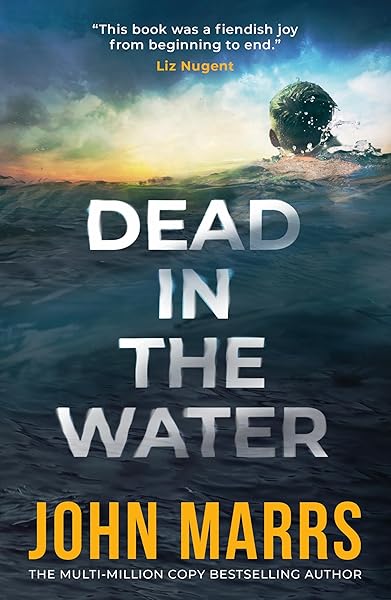
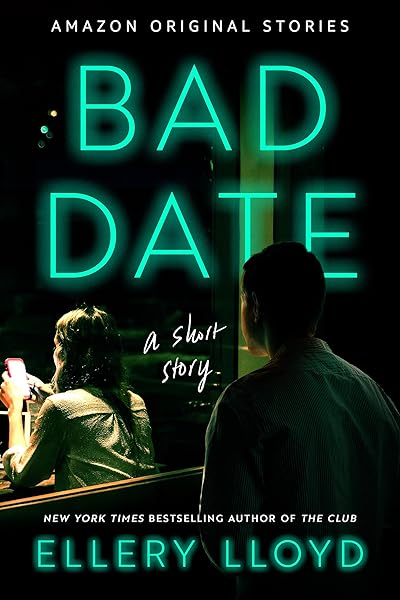
Professional thriller covers — the benchmark




ROI Math: When Each Option Pays Off
Let's attach real numbers to each scenario using our market data.
The baseline: A romance novel in Kindle Unlimited earns approximately $7.58 per sale/read based on our dataset of 2,500+ bestselling books. 58% of romance titles are enrolled in KU. The average romance novel is 414 pages. For a thriller, the numbers are $8.86 per sale, 36% KU enrollment, 350 pages. For fantasy, $11.67 per sale, 42% KU, 469 pages.
Scenario: First Book, Unknown Author
You're publishing your first novel. No email list, no social media following, minimal marketing budget. Expected first-year sales: 50-200 copies (realistic for an unknown author with basic marketing).
AI cover ($3): Pays for itself with 1 sale. Even at 50 copies, the cover cost is $0.06 per sale. Risk: negligible.
Premade ($150): Pays for itself with 20 romance sales or 13 fantasy sales. At 50 copies, the cover cost is $3.00 per sale. At 200 copies, it's $0.75 per sale. Risk: low.
Custom designer ($600): Pays for itself with 79 romance sales or 51 fantasy sales. At 50 copies, the cover cost is $12.00 per sale — eating into your margin significantly. At 200 copies, it's $3.00 per sale. Risk: moderate for a first book.
Recommendation: For a first book, use AI or premade. The marginal quality improvement from a custom designer doesn't justify the risk when you haven't validated market demand. Save designer budgets for books that have proven they sell.
Scenario: Series Author, Books 2-5
You've published Book 1, it's selling 30-50 copies per month, and you're writing books 2 through 5. You need consistent covers that form a cohesive series brand.
AI covers for the series ($15-25 total for 5 books): Each cover pays for itself with a single sale. Series consistency is achieved through matching typography templates, color palettes, and prompt styles. Total investment for 5 covers: less than $25. Risk: zero.
Premade covers ($150 each, $750 total): Finding 5 premade covers that look like a cohesive series is challenging. Most premade sites don't offer series sets. You'll likely end up with covers that are individually professional but don't look like they belong together. Risk: moderate — the money spent is recoverable, but the brand inconsistency may hurt series sell-through.
Custom designer ($500 each, $2,500 total): A designer can create a series template and apply it consistently across all 5 books. This is the highest quality option, but $2,500 is a significant investment for a series that's still proving itself. At 30 copies/month per book, that's 150 sales/month across the series. At $7.58 average (romance), you're earning $1,137/month — the designer investment pays off in about 2.2 months. Risk: low if Book 1 has established consistent sales.
Recommendation: Start with AI covers for the series. If the series reaches steady monthly revenue, consider a designer rebrand for all 5 books simultaneously to maximize the brand consistency effect.
Scenario: Established Author, Rebrand
Your backlist of 10+ books is generating $2,000-5,000/month. You've identified that your covers are underperforming compared to comp titles. You want a full rebrand.
Custom designer ($800/book, $8,000 for 10 books): At $3,000/month revenue, this investment pays for itself in 2.7 months if the rebrand improves conversion by even 10%. Historically, well-executed rebrands for established series show 20-40% revenue increases in the first 6 months. On a $3,000/month baseline, a 20% lift = $600/month = $7,200/year. The $8,000 investment returns in 13 months, then keeps paying. Risk: low — the data supports the investment.
This is the scenario where custom designers deliver unambiguous ROI. You have data, you have revenue, and the cover upgrade is a calculated investment — not a gamble.
The Hybrid Strategy: How Smart Authors Actually Do It
The most successful indie authors we've studied don't pick one approach forever. They use a staged investment strategy that matches cover investment to the book's proven commercial value.
Stage 1 — Validation ($0.50-5): New book, unproven concept. Use an AI cover generator to create a professional-quality cover at near-zero cost. Publish, market, and track performance for 3-6 months. The cover is good enough to compete — the goal is to test whether the book finds an audience.
Stage 2 — Optimization ($50-200): The book is selling 20-50 copies/month. It has an audience. Upgrade to a high-quality premade or invest more time in AI generation with premium options — generate 20+ variations, pick the absolute best, refine typography meticulously. Or commission a premade designer to create a custom premade specifically for you (many offer this at $100-200).
Stage 3 — Investment ($500-1,500): The book or series is generating consistent revenue. Hire a genre-specialist designer to create a cover (or series rebrand) optimized for maximum conversion. This is a business investment with calculable ROI, not a speculative expense.
This approach eliminates the biggest risk in indie publishing: spending money before you've validated demand. Too many authors invest $500+ in a cover for a book that sells 30 copies total. The staged strategy ensures your cover investment always corresponds to your book's commercial reality.
The numbers support this approach. In our dataset, 54% of romance titles and 42% of fantasy titles are parts of series. Series readers are loyal — if Book 1 hooks them, they'll buy the rest regardless of whether the cover was AI-generated or custom-designed. What matters is that the cover was good enough to earn the first click. That's a much lower bar than "perfect."
Start with an AI cover and upgrade when your book proves itself
Romance: 58% in Kindle Unlimited

Bad Bishop: A Dark Mafia Romance (Society of Villains Book 1)

Till Summer Do Us Part

Rewind It Back (Windy City Series Book 5)

Say You'll Remember Me

The Wild Card: a single dad hockey romance

Picking Daisies on Sundays

The Fall Risk: A Short Story

King of Depravity: Dark Steamy Mafia/Billionaire Romance (Kings of Las Vegas Book 1)

The Mysterious Bakery on Rue de Paris: An Enchanting and Escapist Novel from the Internationally Bestselling author of The Lost Bookshop for 2025

The Butcher (Fifth Republic Series Book 1)
Fantasy: $11.67 average price

On Wings of Blood: A Novel (Bloodwing Academy Book 1)

Rain of Shadows and Endings (The Legacy)

A Tongue so Sweet and Deadly (The Compelling Fates Saga)

Shield of Sparrows: An Enemies-to-Lovers Epic Romantasy

We Who Will Die: An Epic Romantasy of Forbidden Love, Deadly Secrets, and Vampires in a High-Stakes Arena, Discover a Vividly Reimagined Ancient Rome (Empire of Blood Book 1)
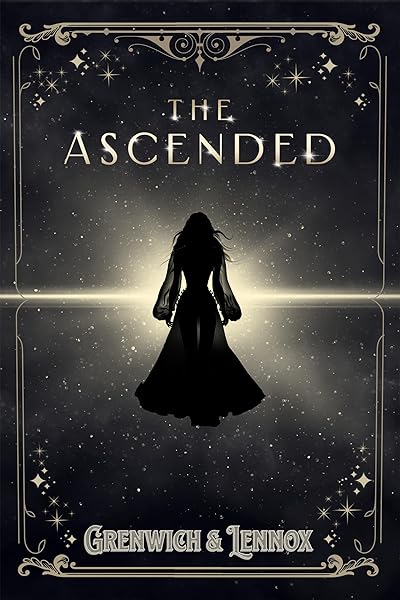
The Ascended (The Aesymarean Duet)

Hollow (Crown of Hearts and Chaos Book 1)

Eldritch (The Eating Woods)

The Bond That Burns: A Novel – A Spicy Romantasy and Dark Shifter Academy Story (Bloodwing Academy Book 2)

Fearless (The Powerless Trilogy)
Common Mistakes at Every Budget Level
Regardless of which option you choose, these mistakes will undermine your cover's effectiveness.
At every level:
Ignoring genre conventions. Your cover must look like it belongs in your genre. Romance readers expect warm tones and script fonts. Thriller readers expect dark palettes and bold sans-serifs. Fantasy readers expect rich colors and classical serifs. Breaking these conventions doesn't make your cover "stand out" — it makes it invisible to your target readers. Study genre conventions with real market data.
Not testing at thumbnail size. Export your cover and view it at 200px wide. If you can't read the title instantly, the cover fails. This applies whether you spent $0 or $1,500. Read our thumbnail optimization guide.
Choosing image over typography. A mediocre image with excellent typography looks professional. A stunning image with poor typography looks amateur. If you're on a budget, invest your attention in the text — font pairing, size, contrast, placement.
DIY-specific mistakes: Using default Canva templates (readers recognize them), choosing the first stock photo you find (other authors did too), and spending so much time on the cover that you delay your book launch by weeks.
AI-specific mistakes: Accepting the first generation without iteration, using tools that bake text into the AI image, and not checking for AI artifacts (extra fingers, nonsensical background details) at full resolution.
Designer-specific mistakes: Hiring a generalist instead of a genre specialist, not providing reference covers in your brief, and accepting a design you're lukewarm about because you've already paid.
Making Your Decision
Stop overthinking this. Use the following decision tree.
Is this your first book? Use AI ($3-5) or a premade ($50-150). Do not spend $500+ on an unvalidated product.
Is your book already selling 20+ copies/month? Upgrade to a high-quality premade or invest in expert-level AI generation. The book has proven it deserves a better cover.
Is your book or series generating $500+/month consistently? Hire a genre-specialist designer. The ROI math works in your favor.
Are you publishing a series? Start with AI for consistency and low cost. Rebrand with a designer when the series revenue justifies it.
Do you need the cover this week? AI (minutes) or premade (hours). Custom designers take weeks.
The cover is important — but it's also replaceable. Amazon lets you update your cover at any time. A good cover today is better than a perfect cover three months from now. Launch, learn, and upgrade when the data tells you to.
Create a professional AI cover in under 60 seconds
Analyze your genre's market data before designing your cover
Try These Ideas on Your Cover
Open the cover editor and preview fonts, colors, and layouts on your book cover.
Open Cover EditorRelated Articles
How AI book cover generators work, what they cost vs traditional designers, and when to use each option. Based on analysis of 2,500+ bestselling covers across 27 genres.
The most common book cover mistakes indie authors make — and how to fix them. Based on analysis of thousands of bestselling covers.
Cost, speed, quality, and uniqueness — a data-driven comparison of AI-generated book covers vs traditional designer covers. With real numbers and blind test results.