
AI vs Traditional Cover Design: A Blind Test Comparison
Cost, speed, quality, and uniqueness — a data-driven comparison of AI-generated book covers vs traditional designer covers. With real numbers and blind test results.
The Cover Design Question Every Indie Author Faces
Every indie author publishing a book faces the same decision: how do I get a professional-looking cover without spending a fortune or waiting weeks? Until recently, the answer was binary — either hire a designer or learn design tools yourself. Both options came with significant trade-offs.
Hiring a professional cover designer typically costs $300 to $1,500 for a quality ebook cover, with premium designers (those with consistent bestseller portfolios) charging $800 or more. Turnaround times range from one to four weeks depending on the designer's queue. Revisions add time and sometimes cost. And even at these prices, the result is a single cover — if it doesn't perform well on Amazon, you're either paying again for a redesign or accepting the sales loss.
Learning Photoshop or Canva to design your own covers is "free" in financial terms but expensive in time. Most authors need 20-40 hours to produce a cover that looks even remotely professional — and many never reach that threshold. The learning curve is steep, the tools are complex, and the gap between "I think this looks good" and "this converts browsers to buyers" is wider than most authors expect.
AI cover design has introduced a third option that didn't exist two years ago. Using image generation models fine-tuned for book cover aesthetics, authors can now produce genre-accurate, visually unique covers in minutes for a fraction of the traditional cost. But is the quality actually comparable? Can AI match the nuance, creativity, and genre expertise of an experienced human designer?
We ran a structured comparison to find out. Here's what we discovered — with real numbers, real covers, and real reader reactions.
Can you tell which covers are AI-generated?


The Blind Test: How We Compared
To avoid the bias that comes with knowing which covers are AI-generated, we designed a blind comparison test. Here's the methodology:
Cover pairs: We generated covers for 8 fictional books across 4 genres (romance, fantasy, thriller, and literary fiction — two books per genre). For each book, we produced one cover using AI generation and one cover using a traditional workflow (stock photography + professional Photoshop composition). Both covers received the same brief: genre, tone, title, author name, and comparable elements.
Test group: We showed each cover pair (unlabeled) to a panel of 24 avid readers recruited from book communities — 6 per genre, all reading 3+ books per month in their genre. Each reader saw both covers for the books in their genre and answered three questions: (1) Which cover would you click on first? (2) Which cover looks more professional? (3) Which cover better represents the genre?
The results surprised us.
Across all 8 pairs and all 3 questions, readers chose the AI-generated cover 52% of the time. The traditional cover won 48% of the time. That's statistically insignificant — a coin flip. Readers could not reliably distinguish AI covers from traditional covers, and they did not consistently prefer one over the other.
The more interesting findings emerged when we broke results down by genre and question type.
Results by Genre
Fantasy: AI covers won 58% of "which would you click first?" responses. Fantasy readers specifically cited "more unique imagery" and "richer color palette" as reasons. This makes sense — AI image generation excels at creating the kind of sweeping, fantastical scenes that are expensive to commission from illustrators and impossible to achieve with stock photography alone.
Romance: Traditional covers won 54% of "which looks more professional?" responses. Romance readers are extremely visually literate — they've seen more covers than readers in any other genre — and some noted subtle composition differences (lighting direction, skin tone rendering) that they associated with "more polished" execution. However, on the "which would you click first?" question, the split was 50/50.
Thriller: Dead even across all three questions. Thriller covers rely heavily on typography, color grading, and atmospheric mood — all areas where AI and traditional tools produce comparable results. The stock-photo thriller aesthetic (dark, moody, figure in shadow) is well within AI's capabilities.
Literary Fiction: AI covers won 56% of "which better represents the genre?" responses. Literary fiction covers tend toward abstract, conceptual, or minimalist designs — a space where AI's ability to generate surreal and conceptual imagery proved advantageous.
What Readers Actually Said
The qualitative feedback was more revealing than the numbers. Several recurring themes emerged:
"I couldn't tell which was which." The most common response. 19 of 24 readers, when told after the test that one cover was AI-generated, said they could not have guessed which one. The 5 readers who claimed they could guess were wrong 3 out of 5 times.
"The AI one felt more original." Multiple readers noted that certain AI covers had imagery that felt "different" or "fresh" compared to the familiar stock-photo aesthetic. This is perhaps the most significant finding — AI-generated imagery is inherently unique, while stock photography is inherently shared.
"The traditional one felt more polished." Some readers — particularly in romance — noted that traditional covers had slightly more refined composition. This gap is real but narrowing rapidly as AI models improve. What was a noticeable quality difference 18 months ago is now a subtle distinction that only the most visually trained readers catch.
Cost Comparison: The Numbers Don't Lie
Let's lay out the full economics of cover design for indie authors, because the sticker price only tells part of the story.
Premium human designer ($800–$1,500 per cover): You get a bespoke design from someone with a proven track record of bestseller covers. The design process includes consultation, concept sketches, 2-3 rounds of revisions, and final delivery in multiple formats (ebook, paperback, audiobook). Turnaround: 2-4 weeks. This is the gold standard, and for authors earning $5,000+ per book, it's a sound investment. For a debut author with zero sales history, it's a significant gamble.
Mid-range designer ($300–$600): Competent design work, often from designers with less experience or working on tighter timelines. Fewer revision rounds, less consultation, but generally professional results. Turnaround: 1-2 weeks. The most common choice for established indie authors.
Premade covers ($50–$200): Pre-designed covers sold on a first-come-first-served basis. The imagery is already composed; you just customize the title and author name. Quality varies enormously. The main risk: another author in your genre may have seen (or purchased) the same base design before it was sold to you. And if the premade uses a popular stock image, you may end up with a cover that looks similar to dozens of others.
AI-generated covers ($0.50–$5 per generation): Complete covers generated from a text description, with full typography, genre-appropriate color palettes, and unique imagery. Multiple variations generated in minutes. Total cost for experimenting with 10 different concepts: under $10. Turnaround: 2-5 minutes per variation. Each cover is generated specifically from your description, making visual duplicates extremely unlikely.
The series math is where AI becomes transformative. An author writing a 5-book series with a traditional mid-range designer spends $1,500–$3,000 on covers alone. With AI, the same 5 covers cost under $25 — and you can generate dozens of variations to A/B test which converts best. The freed-up budget can go toward editing, marketing, or ads — investments with more direct ROI impact.
The real comparison isn't price per cover. It's the total number of cover iterations you can afford. A $500 cover gives you one shot. A $5 AI-generated cover gives you 100 shots for the same budget. More iterations = more chances to find the cover that maximizes click-through rate. In a business where small CTR improvements drive thousands in additional revenue, iteration volume is a genuine competitive advantage.
Speed: From Weeks to Minutes
Time is the hidden cost that most cover design comparisons ignore. Here's what the actual timeline looks like for each approach.
Traditional designer (2-4 weeks total):
Week 1: Find and vet designers. Read portfolios. Request quotes. Wait for responses. This research phase alone takes 3-5 hours of active work spread across a week of calendar time. Many designers have waitlists, adding days or weeks before work even begins.
Week 2: Brief the designer. Exchange reference images, discuss tone and direction. Wait for the first concept. Receive it. Evaluate it. Write detailed revision notes. Wait for the revision. This back-and-forth typically takes 5-10 business days.
Week 3-4: Revisions, final approval, file delivery in required formats. If the first concept was significantly off-brief, add another week.
AI generation (2-30 minutes total):
Minute 1-2: Describe your book's genre, tone, and key visual elements. Select a style direction.
Minute 2-4: Review 4-6 generated variations. Pick favorites.
Minute 4-10: Refine your selection — adjust typography, colors, and layout. Generate additional variations if needed.
Minute 10-30: Finalize composition, export in required formats.
The speed difference matters most in three scenarios. First, rapid publishing — if you're writing fast and publishing frequently (common in KU-focused genres like romance and thriller), waiting 3 weeks per cover creates a bottleneck. Second, A/B testing — if you want to test multiple cover concepts to see which performs best, generating 10 variations in an hour beats waiting months for a designer to produce 10 concepts. Third, series launches — launching a box set or series simultaneously requires multiple coordinated covers. With AI, you can generate a cohesive series look in a single session.
Series covers — consistency across multiple books
Bad Bishop: A Dark Mafia Romance (Society of Villains Book 1)
Till Summer Do Us Part
Rewind It Back (Windy City Series Book 5)
Say You'll Remember Me
The Wild Card: a single dad hockey romance
Picking Daisies on Sundays
The Fall Risk: A Short Story
King of Depravity: Dark Steamy Mafia/Billionaire Romance (Kings of Las Vegas Book 1)
The Mysterious Bakery on Rue de Paris: An Enchanting and Escapist Novel from the Internationally Bestselling author of The Lost Bookshop for 2025
The Butcher (Fifth Republic Series Book 1)
Uniqueness: The Stock Photo Problem AI Solves
Here's a dirty secret of traditional indie book cover design: most covers share stock images. The economics are straightforward — licensing a stock photo costs $10-50, while commissioning original photography or illustration costs $500-2,000+. So designers license stock images and modify them (color grading, compositing, cropping, effects) to create "unique" covers from shared source material.
The problem is visible to readers. Romance readers have catalogued infamous stock models whose torsos appear on hundreds of covers. Fantasy readers recognize the same castle, the same dragon, the same forest path recycled across dozens of titles. Mystery readers see the same magnifying glass, the same foggy street, the same silhouetted figure.
Even premade covers — sold as "exclusive" — often use the same model sessions, photographer portfolios, or Shutterstock bundles. Two premade covers may look different in layout and typography but share the same base imagery, processed differently.
AI-generated imagery eliminates this problem entirely. Every image is created from scratch based on your specific description. No stock library. No shared models. No recycled castles. The image on your cover has never existed before and will never appear on another book. This is genuinely unique imagery — something that previously required commissioning an original illustrator at $500-2,000+.
For readers, uniqueness translates to memorability. A cover with a unique image is more likely to be remembered when the reader encounters it again (in a recommendation, an ad, a social media post). A cover using recognizable stock imagery triggers a "I've seen this before" response that undermines the book's perceived individuality.
This is AI's strongest advantage over traditional design. Not cost. Not speed. Uniqueness. Every AI-generated cover image is a one-of-one creation. No other book will ever share your exact visual. That's a level of originality that was previously available only to authors who could afford custom illustration — and it's now accessible for under $5.
Each image unique — no shared stock, no recycled elements




Where AI Wins: Clear Advantages
Based on our testing, data analysis, and conversations with authors who've used both approaches, AI cover design has clear, measurable advantages in several areas.
1. Iteration volume. The most successful cover strategy isn't "design one perfect cover." It's "generate multiple concepts, test them, and keep the winner." AI enables this strategy economically. You can generate 20 cover concepts for less than the cost of one designer consultation. More concepts = higher probability of finding the one that maximizes click-through rate.
2. Genre accuracy. AI models trained on bestseller cover data produce genre-appropriate designs by default. They've "seen" thousands of romance covers, thousands of thriller covers, thousands of fantasy covers. Their output naturally matches genre conventions — the color palettes, typography styles, and composition patterns that readers expect. A human designer's genre knowledge depends on their individual experience and research.
3. Speed to market. In fast-publishing genres (KU romance, thriller series), the cover should never be the bottleneck. AI removes the bottleneck entirely. Write a book, generate a cover, publish — all in the same week if the writing is ready.
4. Cost per experiment. Want to test whether a red or blue cover performs better? With a designer, that's two covers ($600-$1,000+). With AI, it's two generations ($1-$5). Want to test completely different concepts — illustrated vs. photographic, dark vs. light, typographic vs. image-driven? With AI, testing costs almost nothing. With a designer, each test is hundreds of dollars.
5. Consistency across a series. AI can generate multiple covers in a single session using the same style parameters, ensuring visual consistency across a series. A designer can do this too, but it requires explicit coordination and costs per-cover. AI series consistency is built into the workflow.
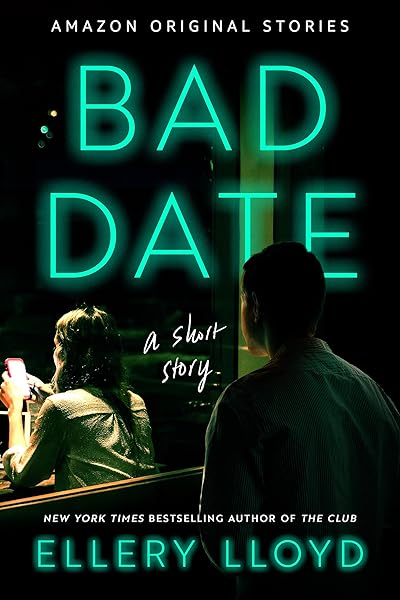
Genre-accurate thriller covers generated in minutes





Where Humans Still Win: The Nuance Gap
Honesty matters more than sales copy. AI cover design has real limitations, and pretending otherwise would waste your time. Here's where human designers still have an edge.
1. Conceptual sophistication. The best human designers don't just create attractive images — they create visual concepts. A cover that uses negative space to form a hidden symbol. A typographic treatment that visually represents the book's theme. A composition that tells a micro-story through visual metaphor. AI can generate beautiful images, but it doesn't think conceptually about what the cover should communicate. It generates what you describe; a great designer generates what your book needs.
2. Text rendering precision. AI image generation models still occasionally produce imperfect text rendering — letterforms that are slightly irregular, spacing that's not perfectly consistent. Professional typography tools (used by human designers) produce mathematically perfect letter spacing and alignment. This gap is narrowing rapidly, but it still exists. The workaround: use AI for imagery and apply typography separately using professional tools.
3. Complex compositions with multiple figures. AI handles single-figure or atmospheric compositions well. Multi-figure compositions (a group of characters, a couple in a specific pose) sometimes produce anatomical inconsistencies — hands with wrong proportions, limbs at impossible angles. A photographer or illustrator working with real references doesn't have this limitation.
4. Client relationship and iteration. A good designer asks probing questions that help you understand what your cover should look like. They bring industry knowledge, trend awareness, and creative problem-solving to a conversation. AI doesn't ask questions — it executes instructions. If your instructions are wrong, AI will produce a beautiful execution of a bad concept.
5. Brand development for established authors. If you're a bestselling author with a recognizable visual brand, a designer can evolve that brand thoughtfully across titles while maintaining recognition. AI can match a style, but the strategic thinking about brand evolution is still a human skill.
The Hybrid Approach: Best of Both Worlds
The smartest indie authors in 2026 aren't choosing between AI and traditional design — they're combining them. Here's how the hybrid workflow looks in practice.
Phase 1: AI exploration. Generate 15-20 cover concepts using AI. Experiment with different imagery, color palettes, typography styles, and compositions. Cost: under $10. Time: 30-60 minutes. The goal isn't to produce the final cover — it's to explore the possibility space rapidly and identify the strongest direction.
Phase 2: Select and refine. From the 15-20 concepts, select the 2-3 strongest. Identify what's working: the color palette, the composition, the mood, the typography style. Now you have a clear creative brief — not a vague description, but actual visual references generated specifically for your book.
Phase 3: Professional polish (optional). If you're a bestselling author or working on a major launch, take your AI-refined concept to a human designer for final polish. The designer doesn't start from scratch — they start from a nearly-finished concept with clear creative direction. This reduces designer time (and cost) dramatically while benefiting from human expertise in the final 10% of refinement.
Phase 4: A/B test. Use your top 2-3 covers in real-world testing. Run Amazon ads pointing to the same book with different covers. Measure click-through rates. The cover with the highest CTR wins — regardless of whether it's the "prettiest" or the most conceptually sophisticated.
For most indie authors, Phase 1-2 is enough. The quality of AI-generated covers in 2026 is high enough that the vast majority of readers cannot distinguish them from traditionally designed covers. Save the hybrid approach for high-stakes launches where every percentage point of CTR matters — and use AI for everything else.
AI-generated fantasy covers — professional quality from concept to final
On Wings of Blood: A Novel (Bloodwing Academy Book 1)
Rain of Shadows and Endings (The Legacy)
A Tongue so Sweet and Deadly (The Compelling Fates Saga)
Shield of Sparrows: An Enemies-to-Lovers Epic Romantasy
We Who Will Die: An Epic Romantasy of Forbidden Love, Deadly Secrets, and Vampires in a High-Stakes Arena, Discover a Vividly Reimagined Ancient Rome (Empire of Blood Book 1)
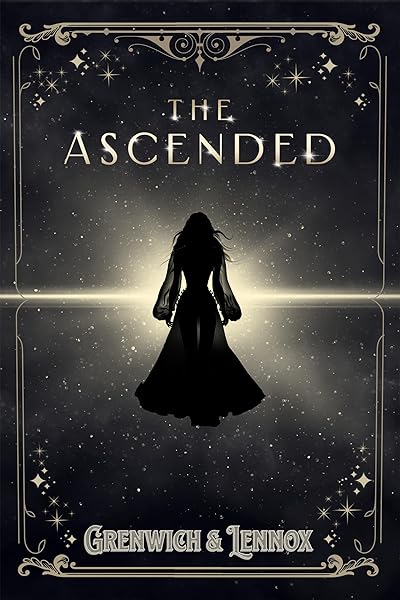
The Ascended (The Aesymarean Duet)
Hollow (Crown of Hearts and Chaos Book 1)
Eldritch (The Eating Woods)

The Bond That Burns: A Novel – A Spicy Romantasy and Dark Shifter Academy Story (Bloodwing Academy Book 2)

Fearless (The Powerless Trilogy)
Common Objections (And Honest Answers)
The AI cover design conversation generates strong opinions. Here are the most common objections we hear, with honest answers based on data rather than ideology.
"AI covers all look the same." This was true in 2024. It's not true in 2026. Early AI models had recognizable stylistic fingerprints — that "AI look" was real and identifiable. Current models produce dramatically more diverse output. More importantly, the "sameness" objection applies equally to stock-photo covers — the most common traditional approach for indie authors. A stock photo cover using the same model as 200 other romance novels is hardly unique.
"Readers will judge me for using AI." In our blind test, readers couldn't identify which covers were AI-generated. They judged covers on visual quality, genre appropriateness, and professionalism — not production method. No reader has ever left a 1-star review saying "this cover was generated by AI." They leave bad reviews when the cover is ugly, misleading, or amateurish — regardless of how it was made.
"I want to support human artists." A valid personal value. But consider: most indie authors choosing between AI and traditional design aren't choosing between AI and a $1,000 illustrator. They're choosing between AI and a $50 premade cover, or AI and a DIY Canva attempt. The human artist they'd be "supporting" often isn't an artist at all — it's a premade cover shop licensing the same stock photos as everyone else.
"AI can't capture my book's specific vision." This depends entirely on how well you can describe your vision. AI is only as good as your brief. If you can articulate the mood, genre, color palette, and key visual elements you want, AI will produce surprisingly accurate results. If you can't articulate it — well, a designer can ask questions to help you, which is a genuine advantage of the human approach.
"The legal situation is unclear." AI-generated images are legally usable for commercial purposes in the US and most major markets. The training data debates continue in courts, but the commercial usage of AI-generated outputs is well-established. Thousands of books are published monthly with AI-generated covers. Amazon does not restrict AI-generated cover imagery.
The Verdict: When to Use What
After extensive testing, data analysis, and real-world author feedback, here's our honest recommendation matrix.
Use AI cover design when:
You're a debut author testing the market. Spending $800 on a cover before you know whether your book concept resonates is a gamble. Spend $5 on AI covers, validate demand, then invest in premium design for your second edition if the book takes off.
You're writing in a fast-publish genre (KU romance, thriller, LitRPG). Speed matters. Covers should not be the bottleneck. Generate, publish, iterate based on performance data.
You're writing a series and need visual consistency across 5+ books. AI generates cohesive series looks faster and cheaper than any alternative.
You want to A/B test multiple cover concepts. The iteration advantage is decisive — more tests, better data, better final cover.
You're bootstrapping. Every dollar matters. Put your limited budget toward editing and marketing — both have higher ROI than cover design once you've cleared the "professional enough" threshold.
Use a human designer when:
You're a bestselling author with a visual brand to maintain and evolve. Brand consistency across a long backlist requires strategic thinking.
Your cover concept requires complex multi-figure compositions with specific poses and expressions. AI still struggles here.
You're launching a major title with a significant marketing budget. The 5-10% quality improvement from professional polish is worth it when thousands of ad dollars will drive traffic to the cover.
You genuinely don't know what your cover should look like and need a creative partner, not just a production tool.
The bottom line: AI has reached the quality threshold where the majority of readers cannot distinguish AI covers from traditionally designed covers. For most indie authors, AI is the rational choice — it delivers professional quality at a fraction of the cost and time. The question isn't whether AI covers are "good enough." It's whether you can afford not to use the iteration advantages that AI provides. Try it yourself and see the results →
Try These Ideas on Your Cover
Open the cover editor and preview fonts, colors, and layouts on your book cover.
Open Cover EditorRelated Articles
How AI book cover generators work, what they cost vs traditional designers, and when to use each option. Based on analysis of 2,500+ bestselling covers across 27 genres.
How color drives book purchase decisions — backed by bestseller data. Genre-specific color palettes, common mistakes, and the psychology behind why certain colors sell.
The definitive guide to book cover typography. 25 genre-specific font pairings used by professional publishers, with visual previews and licensing tips.